
Multi-agency communication team urges caution; offers resourcesinformation released; photo above — Debris piles up against a Silver Falls Trail bridge after rain in the fire area. Even small debris flows can threaten public safety and cause significant damage to infrastructure. USDA Forest Service photo. The Okanogan-Wenatchee National Forest, Washington State Department of Natural Resources (DNR), Chelan County Emergency Management, and Cascadia Conservation District are urging residents, landowners, and recreationists to stay alert as significant post-fire hazards persist in and downstream of the Little Giant Fire area. Although fire suppression operations are concluding, steep and severely burned terrain continues to pose risks from flooding, debris flows, rockfall, and damaged infrastructure. Risks are especially high in portions of the Entiat River drainage and in portions of the Chiwawa River drainage. “Debris flows move quickly. We encourage people living in our burned areas, or below them, to be on alert for any changes in the weather that may set off a debris flow or flooding,” said Sgt. Jason Reinfeld of Chelan County Emergency Management. “Now is the time to remove any household items or debris from potential flood pathways, channels and culverts. Determine what your evacuation route will be before flooding occurs. People in burn areas will be living under these high-alert conditions for the next few years, or until hillsides stabilize.” Residents and landowners are also encouraged to buy flood insurance, sign up for local emergency alerts and consider purchasing a weather radio. Residents and area visitors should avoid narrow canyons, drainages and areas immediately downstream of recently burned areas during storms. Agencies will update the public as post-fire conditions evolve. Burned Area Assessments and Emergency ResponseThe Forest Service has completed its Burned Area Emergency Response (BAER) report for the Little Giant Fire. The report evaluates post-fire watershed conditions and recommends emergency stabilization treatments on National Forest System lands, including closures of some areas to mitigate hazards. The Forest has started implementing the recommendations. The full report and more information on the BAER program are available at: https://www.fs.usda.gov/r06/okanogan-wenatchee/fire/resources DNR has released its Wildfire Associated Landslide Emergency Response Team (WALERT) report, which will offer further insight into debris‑flow potential and landslide‑prone areas. It is available at: https://dnr.wa.gov/sites/default/files/2026-10/ger_hazards_landslide_walert_report_little_giant_2026.pdf “Together, the BAER and WALERT reports provide comprehensive assessment of burn severity and impacts within the fire area along with downstream hazards from landslides and debris flows,” said Karenth Dworsky, Forest BAER Program Coordinator. “This information is shared with local emergency managers and conservation districts to help inform risks and prepare for emergency actions that may be needed following a fire.” “We have significant concerns about potential flooding, mudflows and debris flows downstream of the Little Giant Fire during moderate to heavy rain or rain-on-snow events, especially in the Entiat River drainage,” shared Nancy Calhoun, Post-Fire Debris Flow Program Manager for the DNR Washington Geological Survey. Long-term RecoveryTogether, the agencies emphasize that fire recovery is not a single–season effort. The most dangerous period often begins after the fire is contained, when burned soils lose their ability to absorb water and slopes can fail with little warning. The priority right now is emergency actions to protect life, safety and property. As the most immediate threats pass or are mitigated, agencies will shift focus to longer term recovery efforts. |
“Post‑fire recovery spans multiple jurisdictions, and we’re working closely with our state, county, and conservation district partners to ensure communities understand the risks ahead. Although our authority is limited to National Forest lands, the hazards extend well beyond those boundaries,” said Tara Umphries, Okanogan‑Wenatchee Forest Supervisor.
“The BAER assessment highlights significant concerns in several drainages that will affect safe access over the next couple of years. It’s important to me that we keep public access open, and we’ve already begun securing funding for critical road and trail infrastructure. However, my immediate concern remains the safety of our employees and the public.”
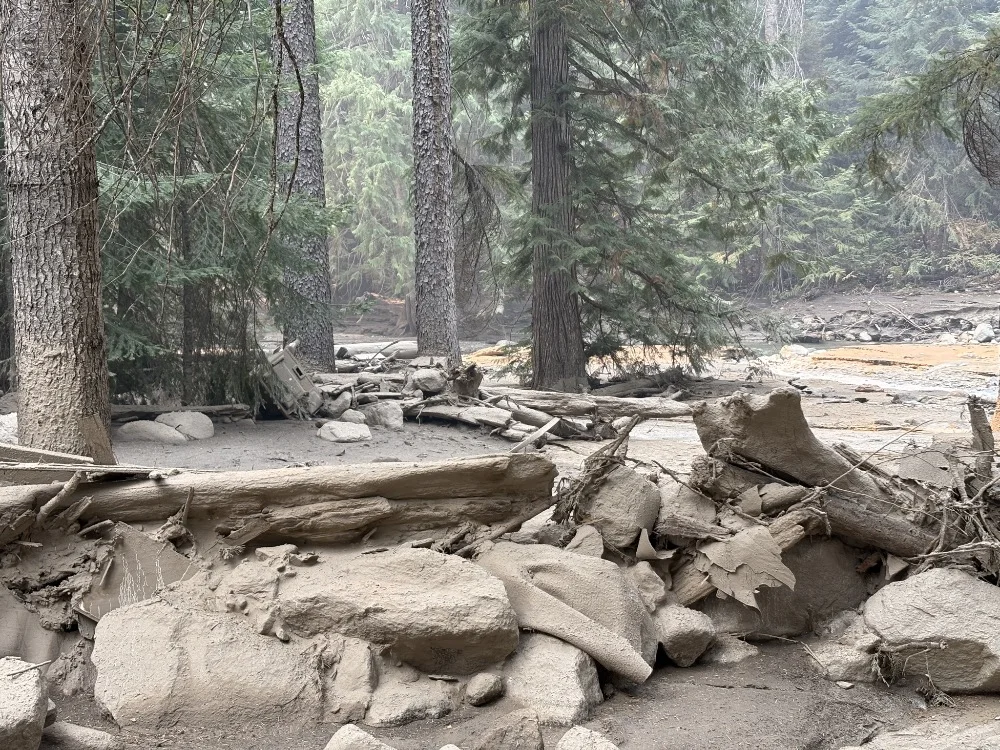
Debris flows in the Entiat River drainage following rain over areas burned by the Little Giant Fire have already caused significant damage. Photo courtesy of Chelan County Emergency Management.
Landowner Resources
Landowners seeking help evaluating their property’s post–fire condition and hazards have resources. Cascadia Conservation District offers site visits, technical assistance, and, when funding allows, financial support for post–fire rehabilitation or help navigating state and federal grant programs. More information is available at: https://cascadiacd.org/programs/wildfire-recovery-resources.
“Experiencing a fire on your property is overwhelming, and often times the folks we meet with are not sure where to start,” shared Patrick Haggerty, Forest and Community Resilience Program Manager with Cascadia Conservation District. “Cascadia can provide initial fire recovery recommendations and connect landowners to state and federal programs that may be able to support long-term recovery of your land.”
The DNR Post-Fire Recovery Program works to help communities and landowners by providing expertise and coordination on their post-fire recovery efforts with a focus on forest health and resilience. Visit https://dnr.wa.gov/forest-resilience-division/post-fire-recovery-program for more information. Landowners can also explore a variety of resources using the DNR Landowner Assistance Portal and Find Your Forester tool.
Chelan County Emergency Management has placed two large piles of sand and sandbags in the Entiat Valley. The supplies are free to Chelan County residents. One pile is at the Preston Creek turnout near Tyee Road, at milepost 21.6 on Entiat River Road, and the other is at the Chelan County Public Works shop, 9486 Entiat River Road, or at milepost 10.3. Residents will be able to fill the bags themselves and use them on their property. Bring your own shovels and gloves.
About the Forest Service:
The Forest Service has brought people and communities together to answer the call of conservation for more than 100 years. Grounded in world-class science and technology — and rooted in communities — the Forest Service connects people to nature and recreation opportunities. The agency manages 193 million acres of public land, supports the nation’s forest industry and energy needs, and operates the largest and most respected wildland fire and forestry research organizations in the world. By providing assistance to state and private landowners and working with tribes and other partners, the Forest Service also helps steward an additional 900 million forested acres within the U.S.
About Washington State Department of Natural Resources Geological Survey:
The WGS Post-Wildfire Debris Flow Program maps alluvial fans before wildfires happen to assist local jurisdictions in planning, mitigation, and emergency preparedness. This mapping allows counties and cities to make educated decisions about their assets, community safety, and growth management using the best-available science. The program also assists communities impacted by wildfires by conducting rapid debris flow hazard assessments in areas recently burned by wildfires. This may include areas downstream that were not impacted by wildfire. We visit areas that have been severely impacted by wildfire, and locations downstream of these areas, where conditions may pose a life and/or safety hazard.
About Chelan County Emergency Management:
Emergency Management is a division of the Chelan County Sheriff’s Office. It prepares for, responds to and coordinates response for natural, technological and human-caused hazards and disasters.
About Cascadia Conservation District:
Cascadia Conservation District in Chelan County, Washington, works together to take care of our beautiful natural resources. Our mission is all about encouraging smart conservation practices for everyone who lives here now and in the future. We’re all about teamwork and finding solutions that make life better for as many folks as possible. Join us in making our county a great place to live!