

Caution: Fire zones are full of hazardous conditions
information released
As containment increases on the Lower Sugarloaf Fire, resources are being reassigned or released to match the remaining workload. The structure protection group is returning to home units. Night-shift personnel will work a short shift this evening, then demobilize tomorrow. Most remaining resources are working on ensuring water runoff doesn’t impact waterways and other repair projects, plus mitigating hazard trees near roadways and infrastructure.
Even though there are fewer flames and less smoke, hazards remain plentiful on and near the Lower Sugarloaf Fire. Fire managers limit unnecessary foot and vehicle traffic by firefighters in or near burned areas to limit their exposure to hazards; land managers maintain closures to protect the public.

Fire-weakened trees are a serious concern. Fire burns readily in dead trees or snags this time of year, when wood has had plenty of time to dry. Even healthy-looking green trees may have sustained enough damage to their roots or trunks to make them unstable. Windy conditions increase the danger, but damaged trees and snags may fall without warning at any time. A falling tree may topple additional trees, extending the hazard zone. On steep slopes, trees, logs, and rocks may tumble a long distance downhill.
After prolonged dry periods, fire can burn deep underground in tree roots or stumps. Even with knowledge of signs of hot spots, firefighters are sometimes injured by stepping into hot ash pits hidden under a thick layer of ash. A step onto thin soil above a burned root may cause a plunge into a bed of coals, resulting in serious burn injuries.
Pickups, engines, water tenders, graders and other equipment are traveling and working on roads. Firefighters on foot are also on and along roads and trails, cutting hazard trees, patrolling for residual hot spots, digging waterbars for drainage, clearing culverts and ditches, and feeding wood chippers.
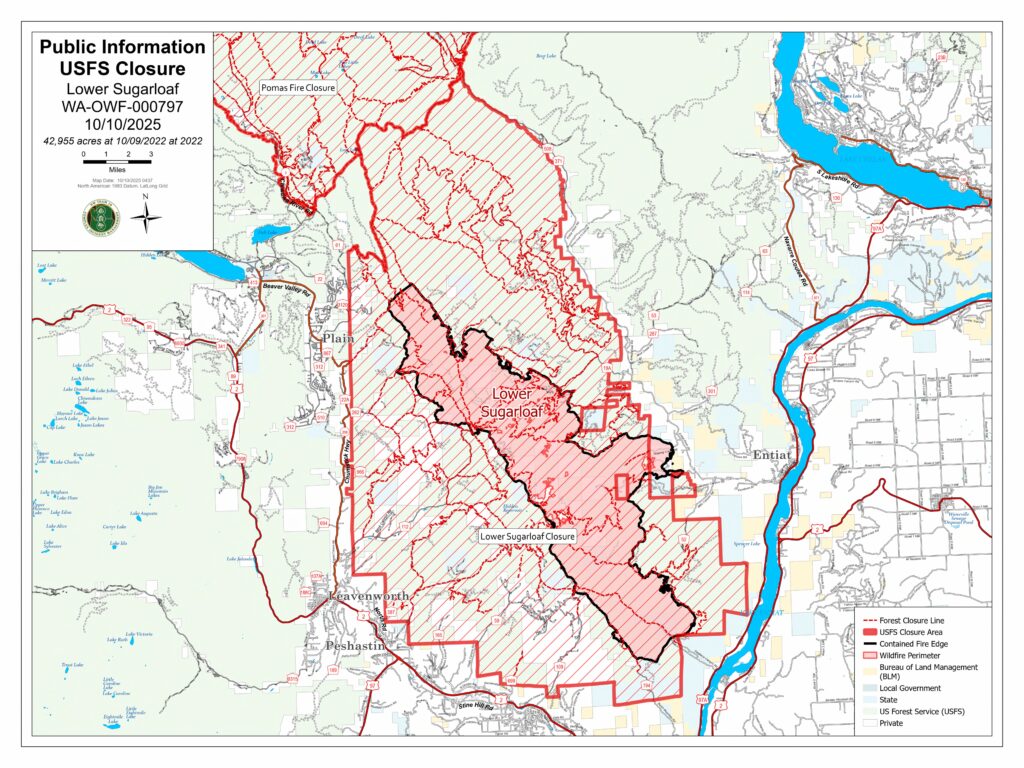
Fire personnel are reporting more members of the public entering forest closure areas, putting themselves and firefighters at risk. With all of the natural hazards related to fire, we ask the public to respect closures and not add more danger to firefighters or themselves.
- Weather: A low-pressure system is pushing into the Northwest. Temperatures will be cooler today, with an increasing chance of showers and a possibility of thunderstorms this afternoon. Winds will shift to coming from the southwest. Precipitation and temperatures in the 40s and 50s are likely through Monday, with a chance of snow at high elevations.
- Smoke: A weak inversion is likely this morning, trapping smoke near the ground. This will be followed by winds from the southwest in the afternoon, pushing smoke away from the Hwy 2 corridor. For current conditions, visit https://wasmoke.blogspot.com/ or Air Now (https://fire.airnow.gov) for air quality information.
- Evacuations: Level 3 (Go Now!), Level 2 and Level 1 evacuation notices are in place around the fire area in Chelan County. Please refer to https://www.co.chelan.wa.us/emergency-management/pages/active-emergencies for the latest evacuation information.
- Closures: For firefighter and public safety, the Okanogan-Wenatchee National Forest has closures in place. Closures keep vital roads and trailways clear for use by wildland firefighters. For current closures, visit: https://www.fs.usda.gov/r06/okanogan-wenatchee/alerts.

Fire Stats and Resource Information
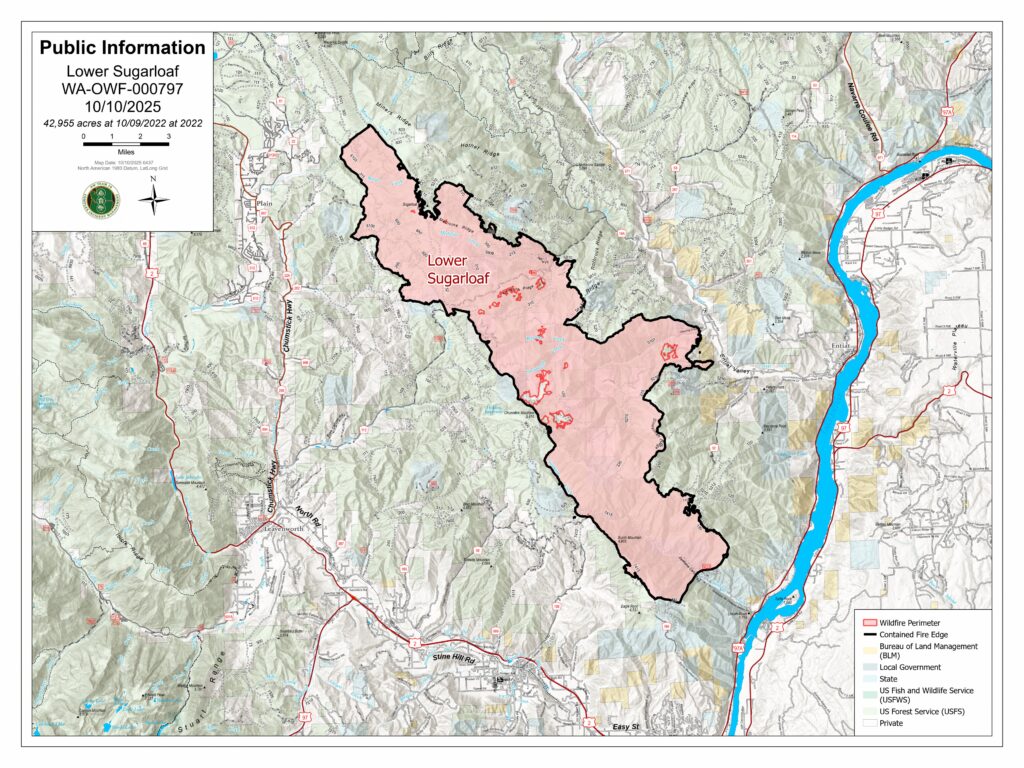
- Size: 42,955 acres
- Incident start date: Sept 1, 2025
- Containment: 90%
- Cause: Lightning
- Location: 12 miles northeast of Leavenworth, WA
- Fuels: Timber, brush
- Resources: 14 Crews, 60 Engines, 5 Helicopters, 12 Dozers, 18 Water Tenders
- Total Personnel: 948
- Phone: (509) 223-9097
- Email: 2025.LowerSugarloaf@firenet.gov
- Inciweb: https://inciweb.wildfire.gov/incident-information/waowf-lower-sugarloaf-fire
- Facebook: https://www.facebook.com/LowerSugarloafFire2025/